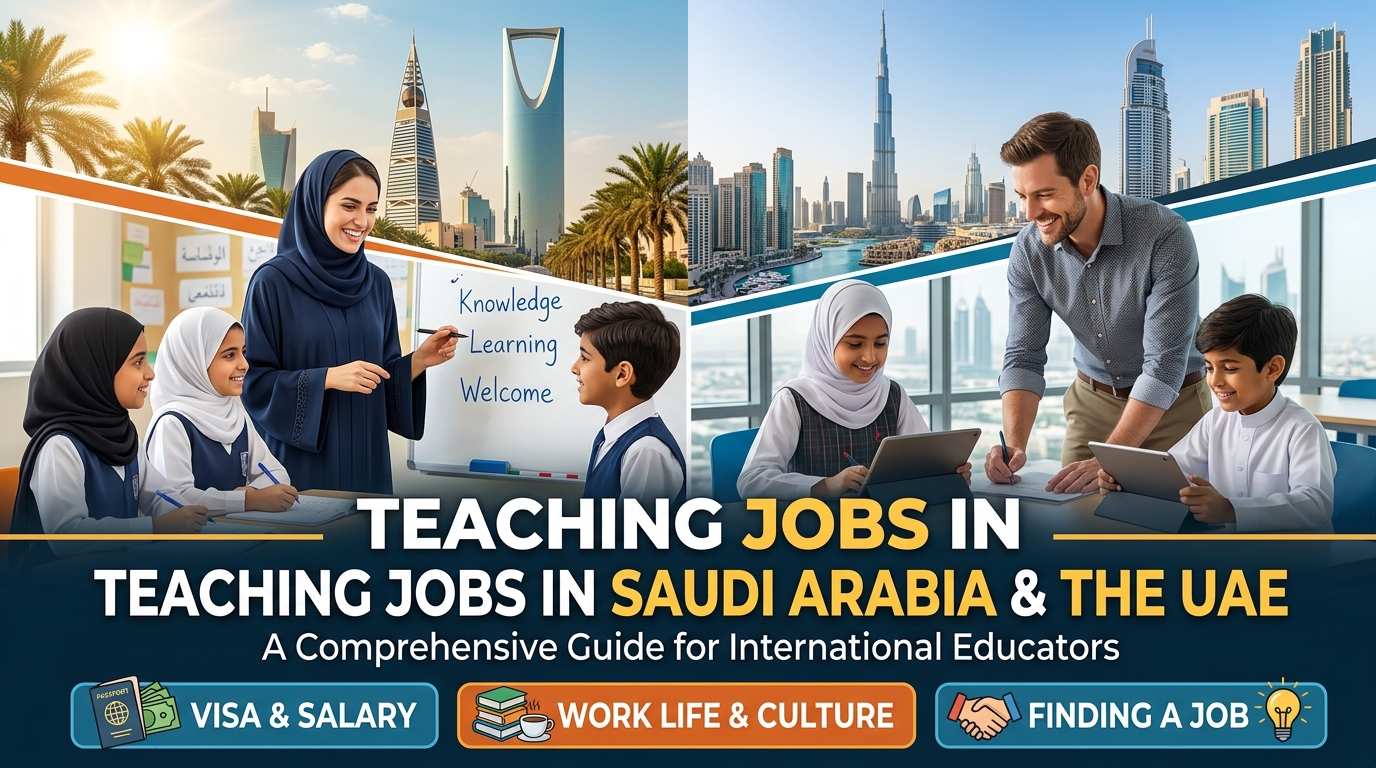
Saudi Arabia and the United Arab Emirates (UAE) have become popular destinations for international educators looking for teaching careers abroad. Both countries have a large education sector that includes international schools, private schools, bilingual schools, universities, colleges, nurseries, and specialized education institutions.
For teachers from countries such as Pakistan, India, the Philippines, the United Kingdom, the United States, Canada, Australia, South Africa, and other parts of the world, teaching in the Gulf can provide international work experience and exposure to multicultural classrooms.
However, requirements vary depending on the school, teaching subject, qualification, experience, and type of position. Understanding the job market before applying can make the process easier.
Teaching Jobs in Saudi Arabia
Saudi Arabia has a large and growing education sector. Teaching positions are available in major cities such as Riyadh, Jeddah, Dammam, Al Khobar, Medina, and other areas.
International schools often follow British, American, International Baccalaureate (IB), or other international curricula. There are also private schools that follow the Saudi national curriculum while offering subjects in English.
Common teaching positions include:
- English teachers
- Mathematics teachers
- Science teachers
- Computer science teachers
- ICT teachers
- Physics teachers
- Chemistry teachers
- Biology teachers
- Primary school teachers
- Early-years teachers
- Special education teachers
- Physical education teachers
- Art teachers
- Music teachers
- School counselors
- School administrators
Experienced educators may also find opportunities as heads of departments, coordinators, academic leaders, vice principals, and principals.
Teaching Jobs in the UAE
The UAE has a diverse education market, particularly in Dubai, Abu Dhabi, Sharjah, Ajman, and other major cities.
The country has many international schools serving students from different nationalities. Schools may follow British, American, IB, Indian, Canadian, Australian, or other curricula.
Teachers may find positions in:
- Primary schools
- Secondary schools
- International schools
- Private schools
- British curriculum schools
- American curriculum schools
- IB schools
- Indian curriculum schools
- Nurseries
- Special education institutions
- Colleges and universities
- Vocational institutions
The UAE’s multicultural environment means that teachers may work with students and colleagues from many different backgrounds.
Qualifications Required for Teaching Jobs
Educational requirements depend on the position and employer.
For many school teaching positions, employers commonly look for a relevant bachelor’s degree along with a recognized teaching qualification.
Examples can include:
- Bachelor of Education
- Bachelor’s degree in a relevant subject
- Postgraduate Certificate in Education
- Qualified Teacher Status
- Teaching licenses
- Recognized teacher certification
A candidate applying for a mathematics position may need a mathematics-related degree and teaching qualification, while an elementary teacher may need an education degree or equivalent teaching credential.
Some schools may have additional requirements based on their curriculum.
Teaching Experience
Experience can be an important factor when applying for international teaching jobs.
Many schools prefer candidates who have classroom experience, particularly experience with the curriculum they teach.
For example, a school following the British curriculum may prefer teachers who understand the relevant British curriculum and assessment methods.
Similarly, an IB school may look for candidates who have experience with IB teaching approaches.
However, requirements vary. Some schools recruit newly qualified teachers, while others specifically seek experienced educators.
Teaching Jobs for Fresh Graduates
Newly qualified teachers can find international opportunities, although the number of available positions may be more limited than for experienced teachers.
Fresh graduates should focus on building a strong application that includes:
- Teaching qualification
- Student-teaching experience
- Classroom placements
- Relevant subject knowledge
- Lesson planning skills
- Digital teaching skills
- Communication abilities
- References
- Professional development
Candidates with limited experience may benefit from gaining classroom experience in their home country before applying for overseas positions.
Teaching Jobs for Experienced Teachers
Experienced teachers generally have more opportunities to apply for specialized and senior positions.
Teachers with several years of experience may qualify for roles such as:
- Senior teacher
- Subject coordinator
- Head of department
- Curriculum coordinator
- Academic coordinator
- Assistant principal
- Vice principal
- Principal
International schools may also value teachers who have experience with specific curricula, examination systems, educational technology, student assessment, or special education.
English Teaching Jobs
English teaching is one of the common areas of employment for international educators in the Gulf.
English teachers may work in schools, language centers, universities, colleges, and private education institutions.
Depending on the employer, candidates may teach:
- General English
- Academic English
- Business English
- English literature
- English language development
- English as an additional language
A bachelor’s degree and recognized teaching qualification may be required for school positions, while language centers can have different requirements.
Primary School Teaching Jobs
Primary teachers work with younger students and may teach multiple subjects.
International primary schools may look for teachers who have experience with:
- Classroom management
- Literacy
- Numeracy
- Science
- Creative activities
- Student assessment
- Child development
- Educational technology
Primary teachers should demonstrate their ability to create engaging lessons and maintain a positive classroom environment.
Secondary School Teaching Jobs
Secondary teachers generally specialize in one or more subjects.
Popular subjects include:
- Mathematics
- Physics
- Chemistry
- Biology
- Computer science
- English
- Business studies
- Economics
- History
- Geography
- Psychology
Teachers applying for secondary positions should clearly state their subject specialization, qualifications, curriculum experience, and examination experience.
International School Jobs
International schools are an important part of the education market in both Saudi Arabia and the UAE.
These schools may offer different curricula, including British, American, IB, Indian, and other international programs.
Before applying, teachers should research the curriculum used by the school.
A teacher with experience in one curriculum may be suitable for another position, but understanding the school’s teaching approach can improve the application and interview performance.
Salary and Benefits
Teaching salaries vary significantly between schools and depend on factors such as qualifications, experience, subject specialization, position, curriculum, and location.
An employment package may include more than the basic salary.
Some international schools may provide benefits such as:
- Housing or housing allowance
- Health insurance
- Annual leave
- Annual flight allowance
- Transportation
- Tuition discounts for children
- End-of-service benefits
- Relocation assistance
Not every school provides all of these benefits. Teachers should carefully review the complete employment offer before accepting a position.
A higher salary does not necessarily mean a better financial outcome if housing and other living costs are significantly higher.
Cost of Living Considerations
Before accepting a teaching position, international educators should research the cost of living in the specific city.
Important expenses may include:
- Accommodation
- Food
- Transportation
- Utilities
- Mobile phone services
- Schooling for children
- Entertainment
- Travel
- Personal expenses
Dubai and Abu Dhabi, for example, can have different living costs from smaller UAE cities. Similarly, living expenses can vary considerably between major Saudi cities and other locations.
Teachers should calculate expected monthly expenses and compare them with the complete employment package.
Work Visa and Employment Process
International teachers normally require the appropriate employment authorization before starting work.
The school or employer generally plays an important role in processing employment and residency documentation for international employees.
Teachers may be required to provide documents such as:
- Passport
- Academic certificates
- Teaching qualifications
- Experience certificates
- Police clearance documentation
- Medical documentation
- Professional references
- Passport photographs
Document requirements can vary depending on the employer and country.
Teachers should avoid making travel or financial commitments based only on a verbal job offer. A written employment offer and clear understanding of the visa process are important.
Document Attestation
International educators may need to have educational documents authenticated or attested before employment.
This can include:
- Degree certificates
- Teaching qualifications
- Academic transcripts
- Professional certificates
The exact process depends on the country where the qualification was issued and the requirements of the destination country or employer.
Teachers should begin preparing documents early because authentication and verification procedures can take time.
How to Apply for Teaching Jobs
There are several ways international educators can search for teaching positions.
School Career Pages
Many schools advertise vacancies through their own careers sections. Teachers can search for schools in their preferred city and review available positions.
Education Recruitment Agencies
Recruitment agencies may connect international teachers with schools looking for qualified educators.
Before working with a recruitment agency, teachers should understand its services, fees, employment process, and relationship with the school.
Online Job Platforms
International teaching vacancies are also advertised through professional job platforms and education-focused recruitment websites.
Teachers should create a professional profile and keep their CV updated.
Professional Networking
Networking can also help teachers discover opportunities. Educational conferences, professional communities, LinkedIn, and teacher networks can provide information about vacancies and schools.
How to Prepare a Teaching CV
A teaching CV should be clear, professional, and relevant to the position.
Include:
- Full name and contact details
- Professional summary
- Teaching qualifications
- Academic qualifications
- Teaching experience
- Subjects taught
- Curriculum experience
- Age groups taught
- Professional development
- Technical skills
- Languages
- References
Avoid filling the CV with unrelated information.
If you are applying for an IB mathematics position, for example, highlight mathematics teaching experience, IB experience, relevant qualifications, assessment knowledge, and classroom achievements.
Teaching Interview Tips
International schools may conduct interviews online before inviting a candidate to the next stage.
Common interview topics include:
- Classroom management
- Lesson planning
- Assessment
- Differentiated instruction
- Student engagement
- Technology in education
- Handling challenging behavior
- Communication with parents
- Supporting students with different learning needs
Some schools may also request a demonstration lesson.
Prepare examples from your previous classroom experience rather than giving only theoretical answers.
Teaching in Saudi Arabia vs. the UAE
Both countries offer international teaching opportunities, but the experience can differ.
Saudi Arabia has a large education market spread across many cities, while the UAE has a highly international school environment concentrated in places such as Dubai, Abu Dhabi, Sharjah, and other major urban areas.
The UAE may appeal to teachers interested in a highly multicultural environment and a large number of international schools. Saudi Arabia offers opportunities across a broad range of cities and education institutions.
Rather than choosing a destination based only on salary, teachers should consider the curriculum, school reputation, workload, accommodation, location, benefits, professional development, and contract conditions.
Cultural Awareness for International Teachers
Teachers moving to Saudi Arabia or the UAE should take time to understand local culture and workplace expectations.
Both countries have their own customs, traditions, laws, and social norms.
International educators should:
- Respect local customs
- Dress appropriately for the workplace
- Be professional with students and colleagues
- Understand local holidays and working practices
- Respect cultural and religious differences
- Follow school policies
- Learn about local laws and regulations
At the same time, international schools can be highly multicultural, with teachers and students from many countries.
Common Challenges for International Teachers
Moving abroad can be exciting, but international teachers may face challenges such as:
- Adjusting to a new education system
- Adapting to a different culture
- Working with students from different backgrounds
- Managing relocation
- Finding suitable accommodation
- Understanding employment procedures
- Being away from family
- Adjusting to climate and lifestyle
Good preparation can make these challenges easier to manage.
How to Avoid Teaching Job Scams
International teachers should be careful when applying for overseas positions.
Be cautious if a recruiter:
- Guarantees a job without an interview
- Requests large upfront recruitment fees
- Uses an unprofessional email address
- Refuses to provide school details
- Sends a suspicious employment contract
- Requests payment to “secure” a visa
- Promises an unusually high salary without qualifications
- Pressures you to transfer money quickly
Always verify the school and carefully review the employment contract before making commitments.
Final Thoughts
Teaching jobs in Saudi Arabia and the UAE can provide international educators with opportunities to work in multicultural schools and gain valuable international experience.
The best approach is to prepare well before applying. Make sure your qualifications are suitable, create a professional teaching CV, research the curriculum, understand the employment package, prepare your documents, and carefully review the contract.
Whether you are a newly qualified teacher or an experienced educator, opportunities can be found across primary education, secondary education, English language teaching, special education, international curricula, and school leadership.
For international educators, successful overseas teaching is not only about finding a job. It is also about choosing a school and employment arrangement that match your qualifications, career goals, professional expectations, and personal circumstances.